Ammonia sends humans to the moon
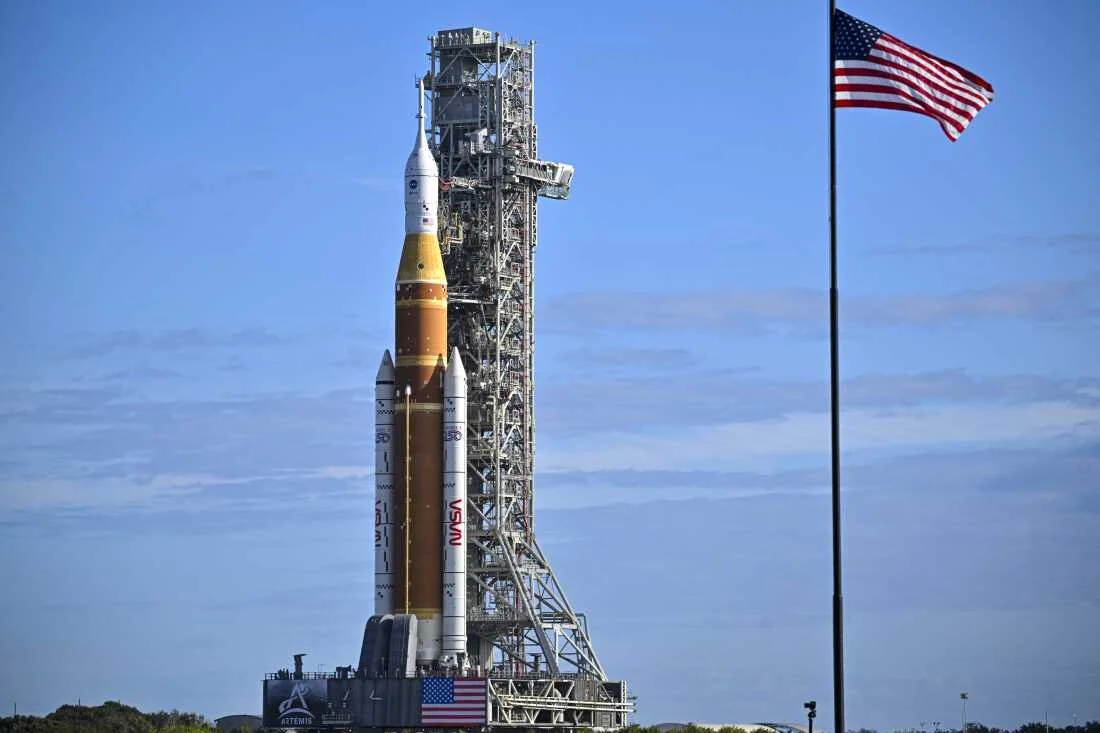
Artemis II on the launch pad
When NASA wanted to end its 50-year drought of sending humans to the Moon, it turned to ammonia-derived propellants.
21,000 pounds of it to be exact.
Ammonia is a building-block chemical, and it is the primary feedstock from which nitrogen-based propellants are made.
For decades, these propellants have been a keystone of space exploration.
In the 1960s, hydrazine ( an ammonia derived propellant) was used to maneuver satellites, propel landers, and power the reaction control systems that sent humans to the Moon for the first time and, more recently, the second time from US soil.
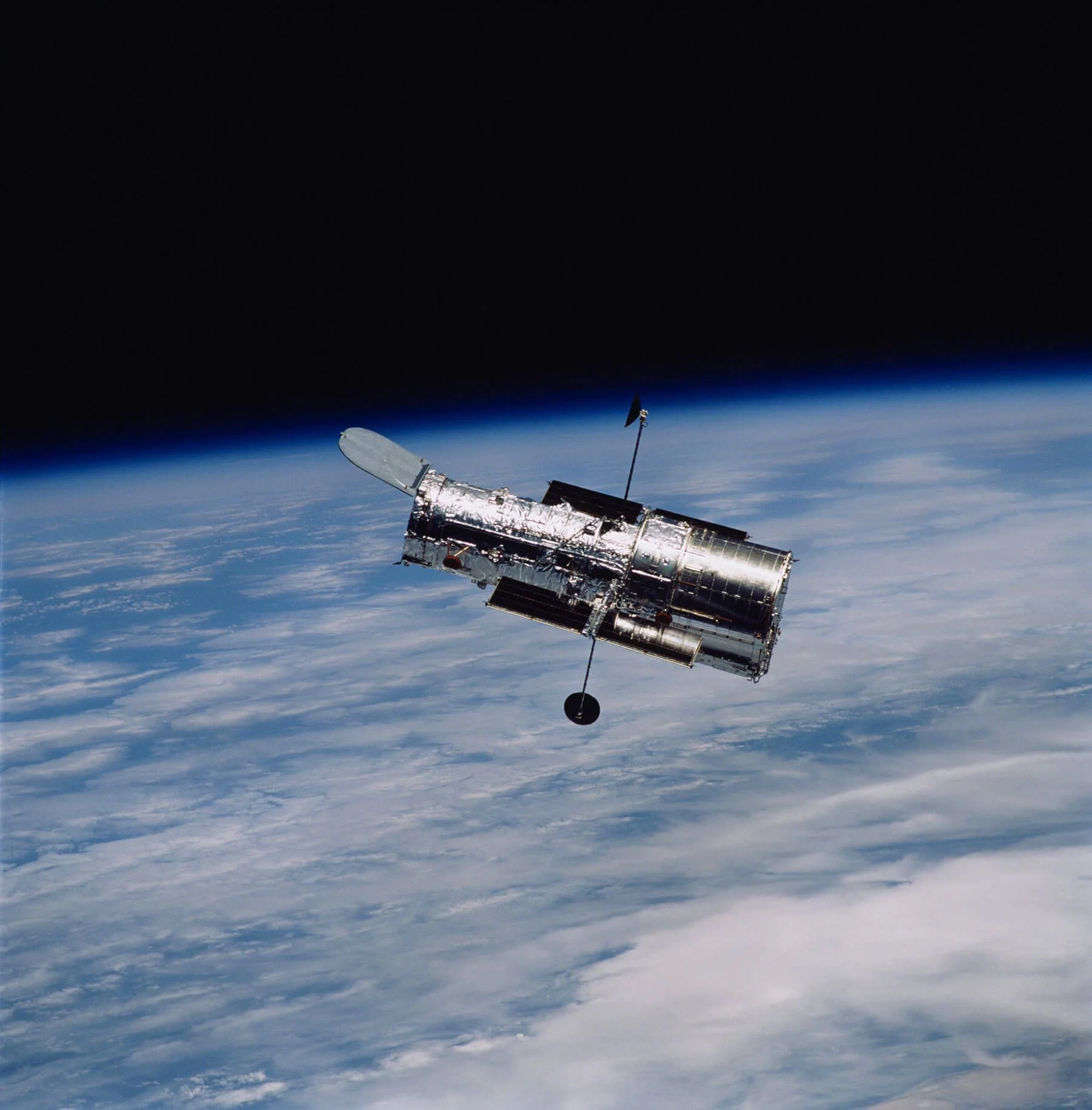
The Hubble Space Telescope used hydrazine to orient the telescope and make adjustments in orbit.
Key facts: ammonia in space programs and ammonia-derived propellants
Hydrazine (N2H4), monomethylhydrazine (MMH), and unsymmetrical dimethylhydrazine (UDMH) are all synthesized from ammonia and are the workhorse storable propellants of the space industry.
Dinitrogen tetroxide (N2O4), the most common oxidizer paired with hydrazine fuels, is itself derived from ammonia via the Ostwald process.
The Apollo Lunar Module's descent and ascent engines ran on Aerozine 50 (a hydrazine/UDMH blend) and N2O4, every kilogram of which traces back to ammonia.
NASA's Artemis I Orion service module carried roughly 21,000 pounds of hydrazine-family propellant for its main engine, auxiliary thrusters, and reaction control system.
Nearly every geostationary satellite, deep-space probe, and crewed spacecraft flying today depends on hydrazine or its derivatives for station-keeping and attitude control.
The Space Shuttle's auxiliary power units and orbital maneuvering system, the Voyager probes, Cassini, the Mars rovers' sky cranes, and the James Webb Space Telescope's thrusters all relied on ammonia-derived propellants.
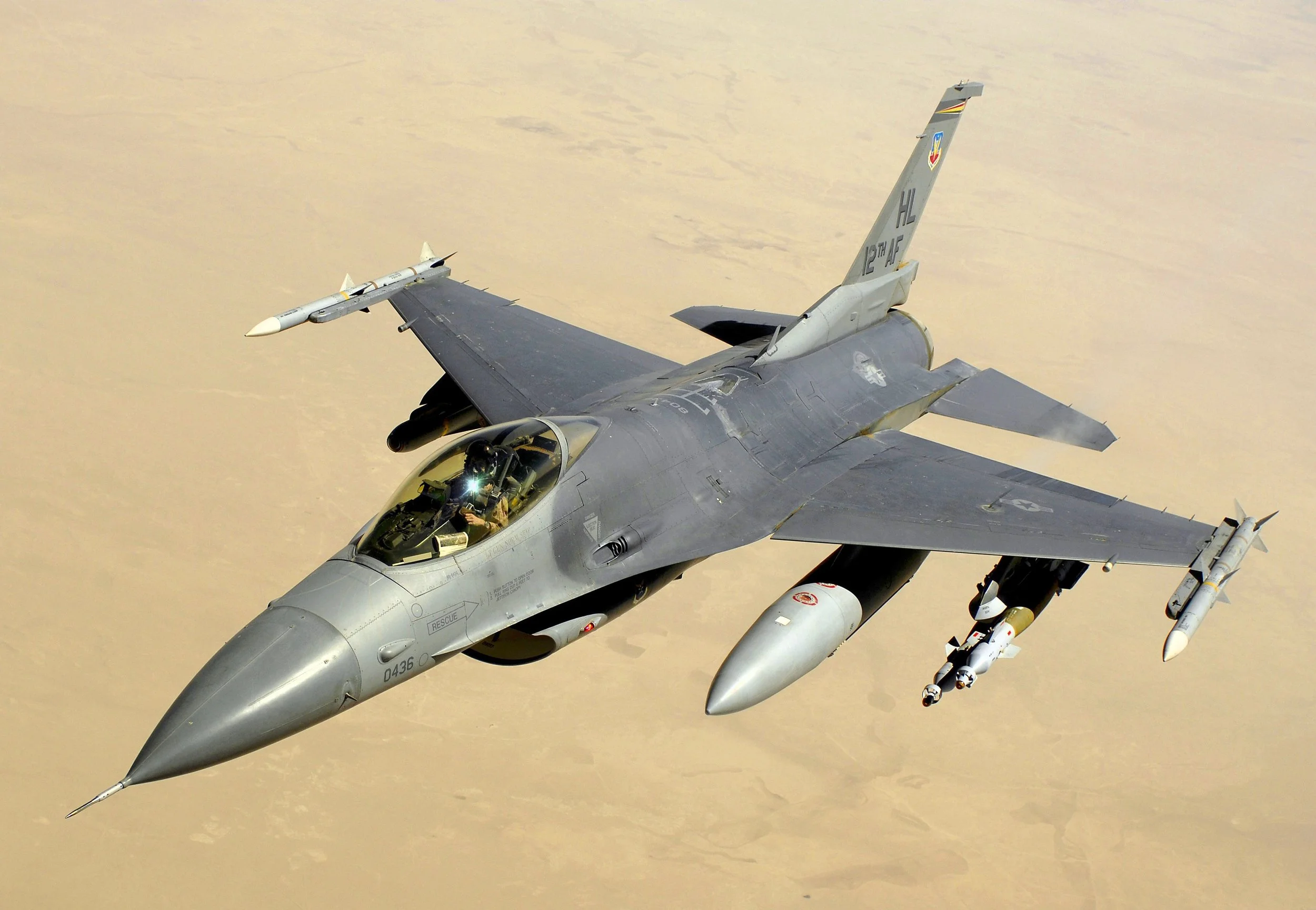
F-16 Emergency Power is Hydrazine
Hydrazine is used as an emergency power source in the F-16 fighter jet. This self-contained system provides rapid, reliable backup power, enhancing the F-16s safety and survivability during critical operational failures
A commodity chemical with mission-critical applications
Ammonia is overwhelmingly thought of as a commodity. Roughly 180 million tons of it are produced globally each year, and about 80% of that goes into fertilizer to feed half the planet. The remaining 20% disappears into a long tail of industrial applications: refrigeration, explosives, plastics, pharmaceuticals, semiconductor manufacturing, NOx abatement, and, of course, propellants. These specialized uses represent a small fraction of total volume, but they are disproportionately critical. Without ammonia, there is no hydrazine. Without hydrazine, there are no satellites holding their orbits, no probes reaching the outer planets, and no humans returning to the Moon.
As space exploration scales, so must ammonia and its nitrogen propellants
The next decade of spaceflight will demand more nitrogen-based propellant than any era before it. Artemis is targeting a sustained lunar presence. Commercial constellations are launching tens of thousands of new satellites, each requiring propellant for orbit-raising, station-keeping, and end-of-life deorbit.
Mars architectures, lunar landers, in-space tugs, and refueling depots all assume a reliable supply of hydrazine-class chemicals.
Possibly even data centers in space will need hydrazine and ammonia based propellants.
Every one of those missions traces back to an ammonia molecule. As launch cadence climbs demand for high-purity, propellant-grade ammonia derivatives will rise sharply.
The supply, know-how, and production gap is a critical flaw
The supply chain underneath all of this is alarmingly thin. Hydrazine production is concentrated in a handful of facilities worldwide, many of them aging, geographically exposed, and operated with decades-old process technology. The know-how to safely synthesize, handle, and qualify these chemicals to aerospace specifications sits with a shrinking pool of specialists.
Ammonia itself is produced entirely via the century-old Haber-Bosch process in centralized plants at massive scale. A single disruption a plant outage, a geopolitical shock, an export restriction could ground missions and delay programs by years.
For a sector that depends on ammonia as fundamentally as spaceflight does, this is a blindspot.
Ammonia matters far beyond this universe and we're working on it
Ammonia is the quiet molecule behind modern civilization. It feeds us, cools us, builds our materials, cleans our air, and as it turns out it is what sends us to the Moon. The same molecule is now being reimagined and meeting future demands of purity, cost, and reliance will take a fundamentally new way of making ammonia.
That's what we're building at Andros Innovations. Whether the destination is a field in Iowa, or a propellant tank on a spacecraft bound for the Moon, the path runs through better ammonia.
We will keep that path open.
Source: DLA
